The Language of Life (Part 5): The 'Virtual Lab'—How We Validate Generative Drugs In Silico
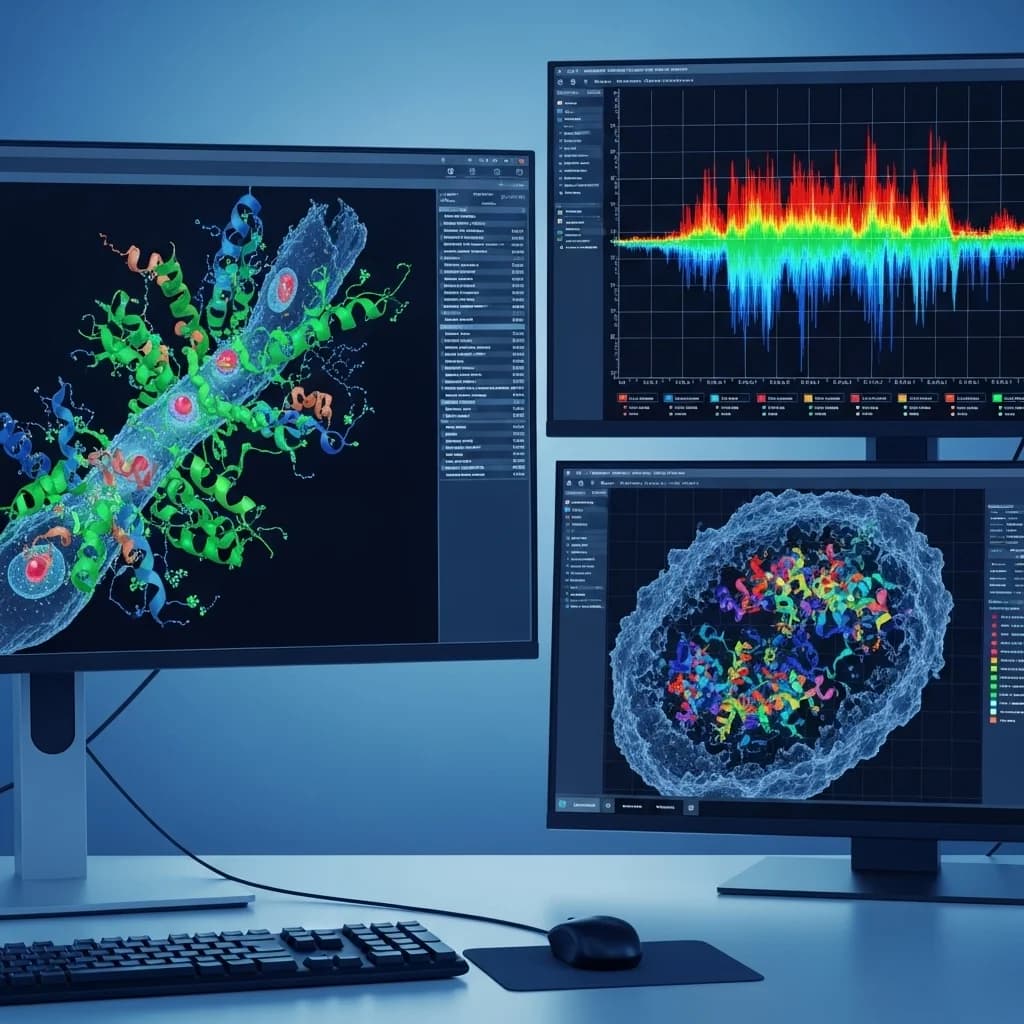
Table of Contents
- The Humanome "Digital Twin" Environment
- The In Silico Gauntlet: Two Key Validation Tests
- Off-Target Profiles as "Systemic Fingerprints"
- Conclusion
The Humanome "Digital Twin" Environment
We have used our generative platforms to design thousands of novel drug candidates. In the old world, R&D teams face a massive validation bottleneck. A medicinal chemist might spend six months synthesizing and testing the "top 3" candidates. This is slow, expensive, and a primary cause of the >90% failure rate in drug development.
How do we bridge this gap? We test all 1,000 candidates in one day, in silico.
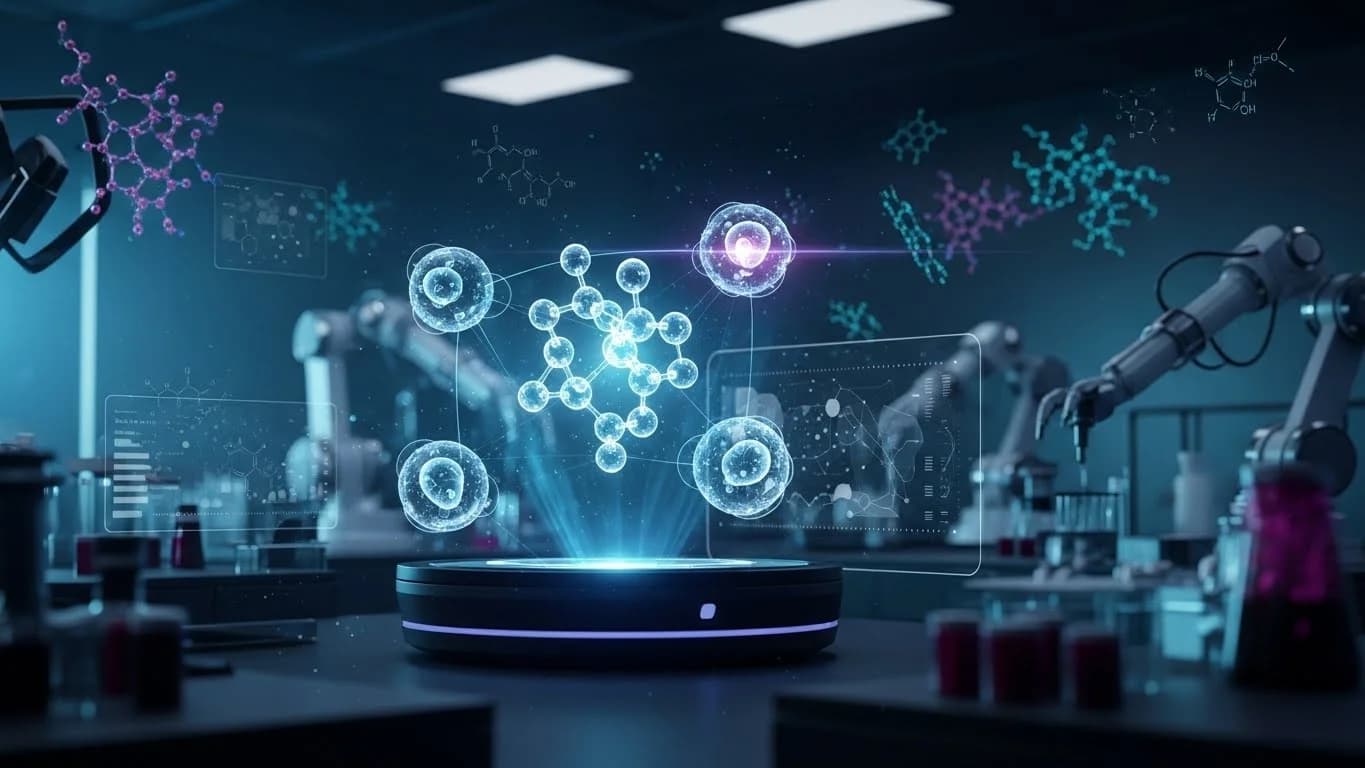
This is where our two core platforms converge: our Generative AI (the "designer") and our Humanome platform (the "virtual lab").
A Humanome "Digital Twin" is not just a single protein model. It is a high-fidelity "computational model representing the structure, behavior, and context of a unique physical asset"—in this case, a human biological system.
It is a multi-scale model that integrates multi-omics data (genomics, proteomics, metabolomics) to create dynamic simulations of cellular and systems biology. We have Digital Twins of the human liver, the heart's electrical system, and, crucially, specific disease pathways like a cancer cell's signaling network.
The In Silico Gauntlet: Two Key Validation Tests
Every candidate our generative AI designs is run through this virtual lab. This "in-silico screening filter" performs two tests that go far beyond simple binding affinity.
Test 1: On-Target Efficacy (A Systems Biology View)
Simple "virtual screening" only tells you if a drug binds a target. This is not the same as efficacy.
We do not just "dock" our drug. We introduce our generated drug into the dynamic simulation of the disease pathway. The key question is: When our drug hits its target, does it actually disrupt the disease-causing network? Does it stop the modeled metabolic process or silence the aberrant signal? This allows us to predict efficacy (does it stop the disease?)—not just affinity (does it stick?).
Test 2: Off-Target Toxicity (A Proteome-Wide View)
Most drugs fail in the clinic not because they miss their target, but because they hit unintended ones, causing toxicity.
To predict this, we have built a "Humanome-wide" in-silico screening panel. This panel contains thousands of 3D models and predictive models (e.g., multi-task GNNs) for critical "anti-targets" known to cause toxicity:
- GPCRs: For signaling side effects
- Kinases: A major source of off-target activity
- Ion Channels: Especially the hERG channel for cardiotoxicity
- Liver Enzymes (e.g., P450s): For metabolic toxicity
We run our candidate against this entire panel to generate a full "off-target profile", predicting its interaction probability against hundreds of critical proteins.
Off-Target Profiles as "Systemic Fingerprints"
This off-target profile is not just a "pass/fail" filter. It is a rich, high-dimensional representation of the drug's predicted systemic behavior. This "systemic fingerprint" is far more predictive of in-vivo adverse reactions than a simple 2D chemical fingerprint.
This allows us to perform a recursive optimization. This "systemic fingerprint" becomes a new input for our Multi-Objective Optimization (MPO) from Parts 3 and 4. We can now prompt our generative model:
Generate(molecule) WHERE reward =
  (w1 * Affinity_Score) +
  (w2 * Efficacy_Score_in_Pathway) +
  (w3 * MINIMIZE(Systemic_Toxicity_Fingerprint))
This allows us to design for low systemic toxicity from the very beginning, not just screen for it later.
Conclusion
Our "virtual lab" is the in-silico filter that lets us "fail fast and cheap". We can test one million hypotheses and find the 100 candidates with the highest predicted probability of both efficacy and safety. These are the 100 we advance to the wet lab.
But a computer simulation is only a theory. It is only as good as its data. In Part 6, we will explain how we "close the loop" and connect our virtual lab to the real world, making it exponentially smarter.
#digitalTwin #inSilicoValidation #systemsBiology #drugScreening #toxicityPrediction