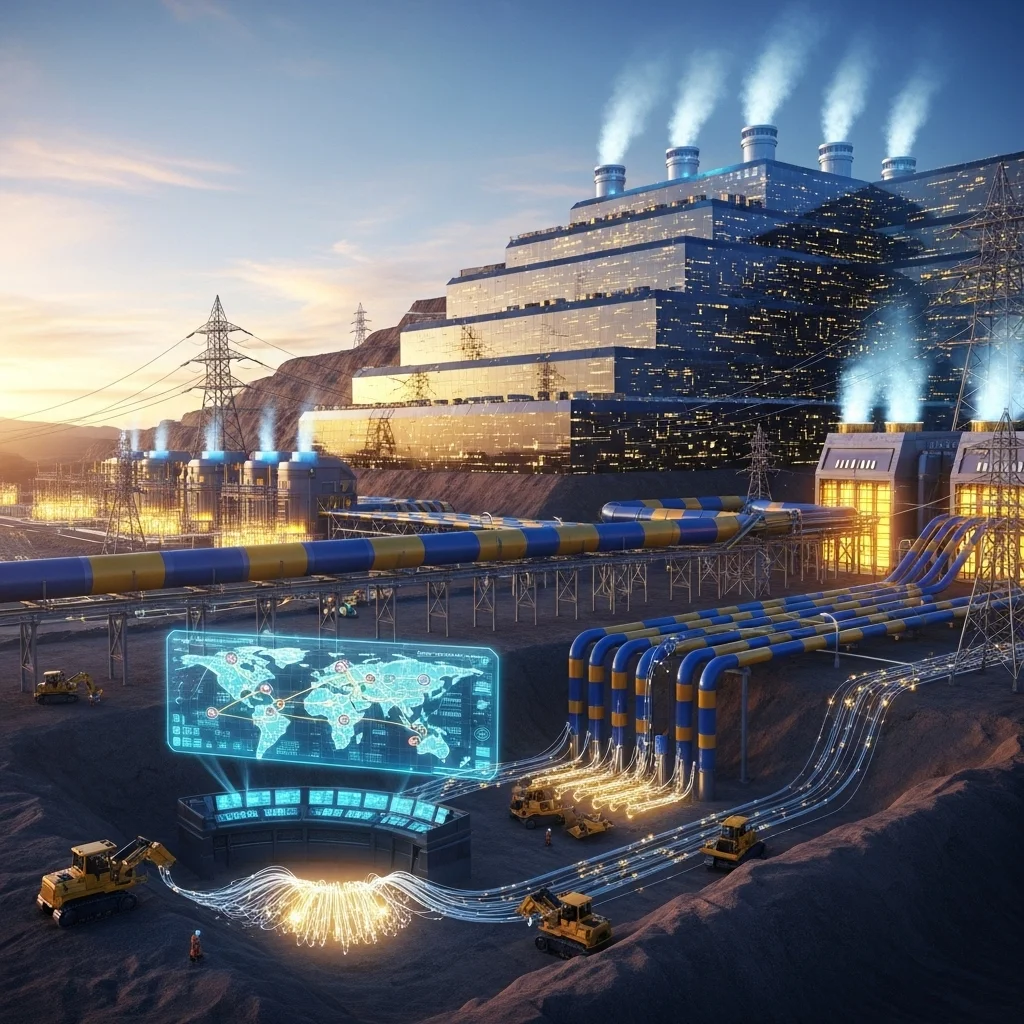
Every gold rush mints two kinds of fortunes: the rare prospector who strikes it rich, and the reliable merchant who sells shovels to everyone digging. In the AI gold rush, the shovels are data centers, and demand for them has decoupled from the hype cycle of any single model or company.
The Constraint Has Moved
For years the binding constraint on AI was compute: who could secure the most GPUs. That constraint is migrating. The new bottlenecks are physical and unglamorous:
- Power. Training and serving frontier models consume electricity at industrial scale. Sites with secured, low-cost, high-capacity power are now strategic assets in their own right.
- Land and cooling. Proximity to power generation, water for cooling, and fiber backbone determines where a data center can actually be built, and those constraints do not move.
- Time. Permitting and construction lead times mean today's site decisions govern capacity three to five years out.
Why This Is a Real Estate Story
The economics rhyme with infrastructure, not technology. The value accrues to whoever controls the scarce inputs: the substations, the cooling-viable parcels, the fiber routes: regardless of which AI company ultimately rents the racks. That is the shovel-seller's position: indifferent to which prospector wins, paid by all of them.
The Strategic Read
Institutional capital has noticed. Data-center development is increasingly underwritten like core infrastructure: long-duration, power-anchored, location-defensible. The AI narrative supplies the demand; the real returns are being engineered in the deeply physical layer of land, power, and patience.