AI In Contract Analysis: Smarter Drafting In Seconds
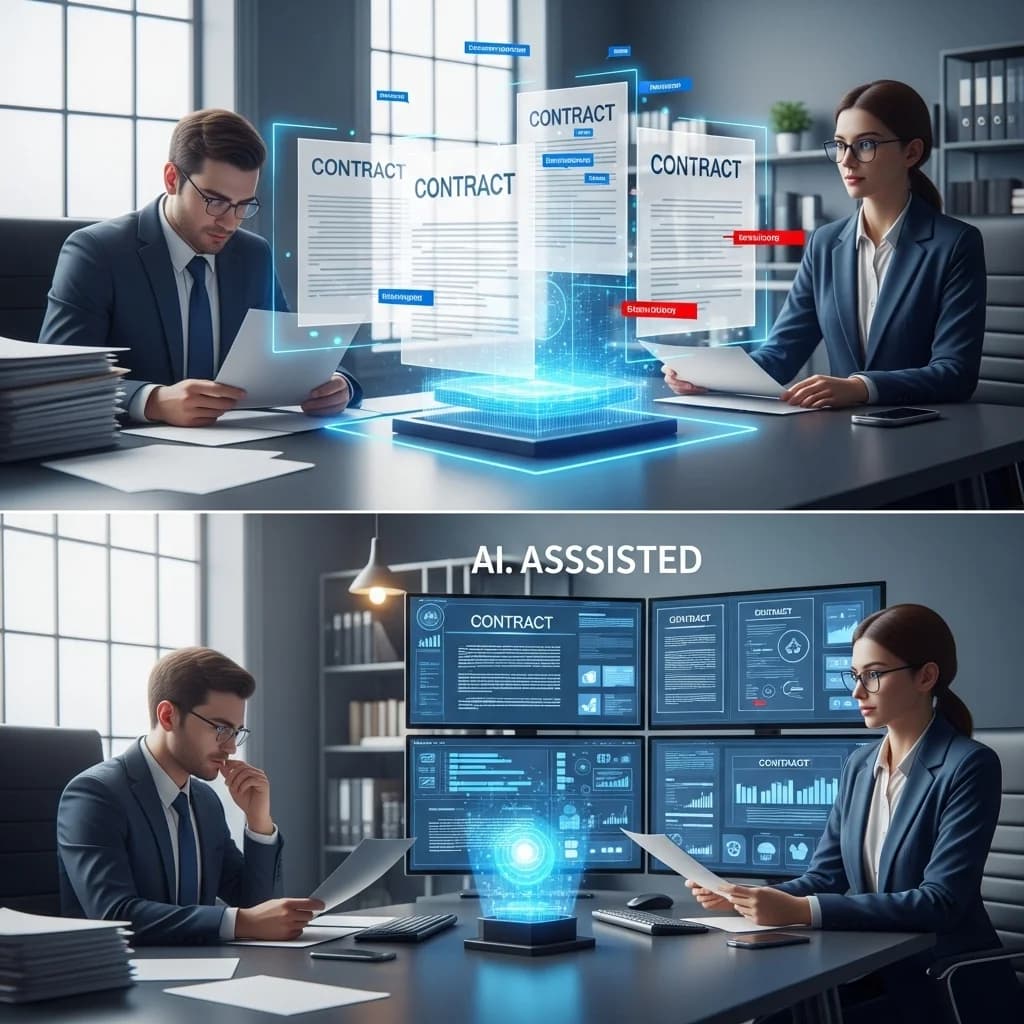
In recent years, the legal industry has seen a substantial transformation driven by artificial intelligence. AI-powered contract analysis is revolutionizing how legal professionals draft, review, and manage agreements. What once took hours of manual review can now be accomplished in seconds, with greater accuracy and consistency.
Table of Contents
- The Challenge of Traditional Contract Review
- How AI Transforms Contract Analysis
- Real-World Applications
- Key Benefits for Legal Teams
- Implementation Best Practices
- The Future of Contract Intelligence
- Conclusion
The Challenge of Traditional Contract Review
Manual contract review has long been one of the most time-consuming and error-prone aspects of legal practice. Attorneys spend countless hours:
- Reading through lengthy agreements word by word
- Cross-referencing clauses across multiple documents
- Identifying non-standard or risky language
- Ensuring consistency with organizational policies
- Checking for compliance with regulatory requirements
This traditional approach is not only slow but also susceptible to human error, especially when dealing with high volumes of contracts or working under tight deadlines.
How AI Transforms Contract Analysis
Intelligent Clause Extraction
AI-powered tools can automatically identify and extract specific clauses from contracts, such as:
- Indemnification provisions
- Limitation of liability clauses
- Termination conditions
- Payment terms and schedules
- Confidentiality obligations
This automated extraction eliminates the need for manual searching and ensures no critical provisions are overlooked.
Risk Identification and Flagging
Modern AI systems can analyze contracts against predefined risk parameters and organizational playbooks. They automatically flag:
- High-risk provisions that deviate from standard language
- Missing clauses that should be present in the agreement type
- Ambiguous language that could lead to disputes
- Compliance issues with regulatory requirements
- Unusual terms that warrant attorney review
Smart Redlining and Suggestions
AI doesn't just identify issues—it provides solutions. Advanced systems offer:
- Alternative language suggestions for problematic clauses
- Preferred clause templates from your organization's approved library
- Redline comparisons against standard forms
- Consistency checks across related agreements
Real-World Applications
Commercial Contracts
For routine commercial agreements, AI can:
- Draft initial versions based on approved templates
- Customize standard clauses based on deal parameters
- Ensure consistency with company policies
- Accelerate the review and approval process
M&A Due Diligence
In merger and acquisition transactions, AI excels at:
- Reviewing hundreds of contracts quickly
- Extracting key terms for comparison
- Identifying change of control provisions
- Flagging consent requirements
Regulatory Compliance
AI tools help ensure contracts comply with:
- Industry-specific regulations
- Data privacy laws (GDPR, CCPA)
- International trade restrictions
- Employment law requirements
Key Benefits for Legal Teams
Time Savings
What traditionally took 4-6 hours per contract can now be completed in minutes, allowing attorneys to:
- Handle higher volumes of work
- Focus on strategic legal analysis
- Respond faster to business needs
- Reduce turnaround times
Improved Accuracy
AI systems maintain consistency and catch issues that humans might miss:
- Uniform application of legal standards
- Comprehensive risk assessment
- Reduced oversight errors
- Better compliance tracking
Cost Efficiency
Organizations realize significant cost savings through:
- Reduced attorney time on routine tasks
- Lower outside counsel expenses
- Fewer post-signature issues
- Decreased contract disputes
Strategic Value
Legal teams can shift focus to higher-value work:
- Complex negotiations
- Strategic business partnerships
- Risk mitigation strategies
- Legal innovation initiatives
Implementation Best Practices
Start with High-Volume, Low-Complexity Contracts
Begin your AI implementation with:
- NDAs and standard confidentiality agreements
- Vendor agreements with repetitive terms
- Employment contracts and offer letters
- Standard purchase orders
Build a Robust Playbook
Success with AI requires:
- Well-defined contract standards
- Clear risk parameters
- Approved clause libraries
- Escalation procedures
Train Your Team
Ensure your legal team:
- Understands the AI's capabilities and limitations
- Can effectively review AI-generated suggestions
- Knows when to override AI recommendations
- Continuously improves the system with feedback
Monitor and Optimize
Regularly assess:
- Time savings achieved
- Accuracy improvements
- User satisfaction
- System performance
The Future of Contract Intelligence
AI in contract analysis is rapidly evolving with:
Natural Language Understanding
Next-generation systems will better understand:
- Complex legal concepts and terminology
- Context-dependent clause interpretation
- Negotiation dynamics and patterns
- Industry-specific conventions
Predictive Analytics
Future tools will predict:
- Likely negotiation outcomes
- Contract performance risks
- Optimal clause combinations
- Market-standard terms
Integrated Workflows
AI will seamlessly connect:
- Contract drafting and review
- E-signature platforms
- Contract lifecycle management
- Business intelligence systems
Conclusion
AI in contract analysis represents a paradigm shift in legal practice. By automating routine tasks and enhancing accuracy, AI empowers legal professionals to work smarter, not harder. The technology doesn't replace attorney judgment—it amplifies it, allowing lawyers to focus on strategic thinking while AI handles the repetitive heavy lifting.
Organizations that embrace AI-powered contract analysis gain a competitive advantage through faster turnaround times, reduced risk, and more efficient use of legal resources. As the technology continues to advance, the gap between adopters and laggards will only widen.
The question is no longer whether to adopt AI for contract analysis, but how quickly you can implement it to stay ahead in an increasingly competitive legal landscape.